


To receive an accurate deep cleaning quote, provide your property’s location, approximate size, room numbers, current condition, required tasks, recent photographs, access arrangements and preferred cleaning date. Those details help a cleaning company understand what the job actually involves, rather than estimate everything from a brief description such as “a three-bedroom house”. Think about two homes on the same street: one might be empty and regularly maintained, while the other contains furniture, greasy kitchen cupboards and bathrooms with stubborn residue. Their bedroom counts may match, but their cleaning requirements certainly do not. If you want a useful quotation, the goal is to describe the work clearly enough for the company to plan its people, equipment and time. You do not need technical cleaning knowledge, perfect measurements or a professionally prepared property report. A straightforward explanation, supported by honest photographs, usually gives the conversation a much stronger starting point. This guide explains what to include, what people commonly overlook and how to compare quotations without getting distracted by the final figure alone. Whether you are preparing a home for occupation, arranging an office clean or tackling accumulated household grime, a little preparation helps you make a more informed booking and reduces avoidable misunderstandings on cleaning day.
Why the Details Matter When Requesting a Quote
A cleaning quotation is only useful when the company and the customer are describing the same job. You might understand “clean the kitchen” to include the oven interior, cupboard shelves, extractor hood and the space behind the fridge, while another person might mean accessible surfaces and cupboard fronts. Neither description tells the whole story until someone explains the boundaries. A clear cleaning scope turns a broad request into work that can be assessed, scheduled and checked afterwards. It also gives you a better basis for comparing providers, because a lower price means very little if it excludes the tasks you consider essential. Imagine ordering curtains without saying how many windows you have or how large they are; the supplier could provide a starting figure, but important assumptions would remain unresolved. Cleaning works in a similar way, although condition and accessibility add further variables. Your information helps the provider identify those variables before arriving at the property. Ask whether the proposed amount is a preliminary estimate, a quotation based on photographs or a price confirmed after inspection. Also ask which assumptions support it, especially where parts of the property cannot be assessed remotely. That conversation is not unnecessary administration; it helps establish what you are buying, what the team expects to find and how any genuine changes will be handled.
Describe Your Property and Its Location
Start by explaining what kind of property needs cleaning and where it is situated. A freestanding home, furnished apartment, office suite and guesthouse can have very different layouts, access requirements and working arrangements, even when their floor areas are similar. Give the suburb when making your initial enquiry, then provide the full address directly to the company when needed for an assessment or booking. For a Cape Town property, saying “Sea Point apartment” is useful, but adding that it is on an upper floor with controlled access makes the description more practical. Mention whether the property is occupied, vacant, partly furnished or waiting for a tenant to move in. Include separate spaces such as a garden cottage, scullery, garage or enclosed balcony if you want them included, because these areas are easy to miss when someone describes only the main house. Commercial customers should explain how the premises are used and whether staff or customers will remain on site during cleaning. You can use Imperial Cleaning’s deep cleaning services page as a starting point when discussing residential or commercial requirements; the page describes both service categories. Your individual quotation should still identify the rooms and tasks agreed for your property, rather than rely solely on a general service description. Imperial Cleaning Services
Provide Floor Area and Room Numbers
Your property’s approximate floor area in square metres gives the cleaning company a useful indication of scale, while room numbers explain how that space is divided. Provide both wherever possible, because neither one fully describes the workload on its own. A large open-plan room differs from several smaller rooms containing doors, cupboards, fixtures and furniture that require individual attention. Include bedrooms, bathrooms, separate toilets, kitchens, living areas, passages and any additional spaces covered by the request. If you have an existing floor plan, it can help communicate the layout, but you do not need to commission one simply to obtain a cleaning quotation. State clearly when your measurement is approximate or comes from a property listing, and explain whether it includes areas you do not want cleaned. For example, a listed property size might include a garage or outdoor space, while your request covers only the interior. If you do not know the floor area, provide the room count and photographs, then ask whether rough room dimensions would be useful. Avoid guessing a precise measurement just to complete a form. An honest range is more helpful than an exact-looking number that misrepresents the property. The aim is to give the estimator enough context to understand the scale and layout, with any remaining uncertainty clearly identified.
Explain the Property’s Current Condition
Describe what the cleaners will actually encounter, including the areas that worry you most. “Quite dirty” means different things to different people, whereas “grease on the cupboard fronts, residue on both shower doors and dust behind furniture” gives the company something concrete to assess. Explain whether the property receives regular cleaning, has stood empty, has recently been occupied by tenants or has undergone building work. Mention accumulated pet hair, sticky floors, food residue, visible staining and heavily soiled corners where relevant. There is no need to feel embarrassed or soften the description; the purpose of the enquiry is to arrange help with the condition as it stands. Be equally clear about existing damage, including scratched surfaces, peeling coatings, damaged grout or discoloured sealant, so those issues are not confused with dirt that cleaning can remove. If you know when a stain appeared or what caused it, include that information without making assumptions about whether it will come out. Cleaning and repair are different tasks, and a quotation should not depend on an unrealistic promise that every mark will disappear. You should also explain if the condition may change before the appointment, perhaps because tenants are still moving out or contractors are finishing work. This gives the provider a chance to assess the timing and agree how the final condition will be confirmed.
Send Recent Photos and a Short Walkthrough Video
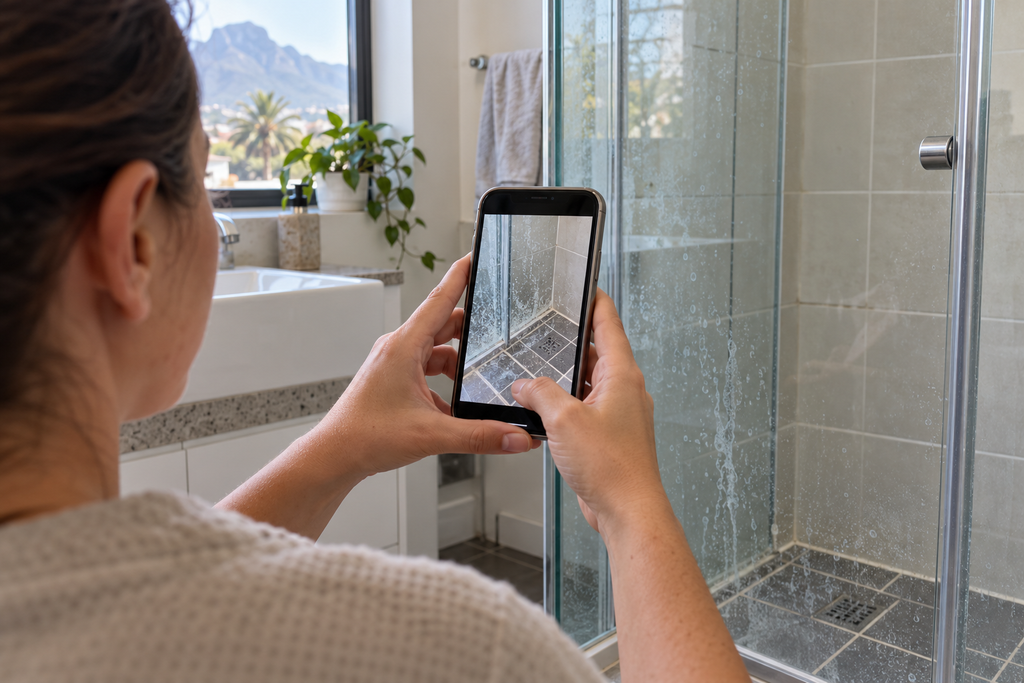
Recent photographs help translate your description into something the estimator can see. Begin with a wide view of each room, then add closer photographs of the areas requiring extra attention, such as greasy cupboard fronts, marked floors, shower residue or dusty window tracks. Photograph the property in reasonable light and avoid filters, because altered colour or contrast can make surfaces harder to assess. A short walkthrough video can help explain how rooms connect, where furniture restricts access and which spaces are included in the request. Move slowly enough for the viewer to understand what they are seeing, and describe relevant details instead of sweeping quickly through the entire property. Show both the overall space and the specific problem, rather than sending only close-ups that offer no sense of scale. Keep private documents, family photographs, security codes and other sensitive information out of view wherever practical. If an area cannot be photographed safely or without moving a heavy object, say so rather than attempting it yourself. Pictures are valuable, but they do not reveal everything: hidden surfaces, uncertain materials and some types of damage may still require inspection. Ask the company whether your images provide enough information for a quotation or whether a site visit would resolve important questions before either side commits to a final scope.
Define Exactly What You Want Cleaned
The phrase “deep cleaning” describes a level of attention, but it should not replace a specific agreement about the work. Explain your priorities room by room and distinguish between surfaces, interiors and areas behind or underneath objects. In a kitchen, for example, you might request cupboard fronts but not cupboard interiors, or include an oven interior while excluding the fridge. In a bedroom, you may want accessible floors and skirting boards cleaned without asking the team to empty wardrobes or reorganise personal belongings. Windows also need clarification: internal glass, external glass, frames, tracks and high-level panes are separate details worth discussing. State your exclusions as clearly as your inclusions, particularly if you only need selected rooms or want the team to focus on the most demanding areas. This helps prevent the provider from allowing for work you do not need, while making your essential tasks easier to identify. You should also explain what result matters most to you, whether that is preparing for occupation, improving kitchen cleanliness or presenting an office before reopening. Avoid relying on phrases such as “everything included” unless the quotation defines what everything means. A written scope provides a shared reference for the booking, gives the cleaning team clearer instructions and makes the final walkthrough more objective for everyone involved.
Identify Delicate Surfaces and Special Finishes
Tell the company about materials that may require particular care, especially when they are not obvious from photographs. Examples include natural stone, timber flooring, specialist coatings, polished metal, decorative wallpaper and upholstery with manufacturer cleaning instructions. You do not need to identify every finish with technical precision; describe what you know and say when you are uncertain. If you have care instructions, product details or information from the installer, share those with the estimator before the appointment. Explain any existing concerns, such as a floor coating that has started lifting or a countertop that was previously marked by a cleaning product. These details help the company decide whether a closer assessment, a suitable method or a discreet test area is needed before proceeding. Do not assume that stronger products or harder scrubbing will produce a better result, particularly when the surface itself may be vulnerable. The CDC advises checking that cleaning products are suitable for the surface and following product instructions in its home cleaning guidance. For quotation purposes, your responsibility is to communicate known materials and limitations, while the provider should explain any restrictions affecting the proposed work. That exchange can prevent a misleading expectation that every surface can be treated in the same way or restored to an identical finish. CDC
Flag Specialist Work and Additional Services
Some requests need more assessment than a general deep cleaning description allows. Tell the provider about post-construction residue, persistent odours, visible mould, significant water damage, pest contamination or substantial waste that needs removing. Do not assume these issues are automatically included simply because the property requires a thorough clean. Describe what you can see, how extensive it appears and whether the underlying cause is known, without attempting to diagnose a problem yourself. Likewise, specify whether you want carpets or upholstery treated, curtains cleaned, appliances moved or exterior areas attended to. These requests may involve different equipment, additional time or separate arrangements, and the quotation should explain how they will be handled. For fabric furniture, identify the number and approximate size of items rather than describing them collectively as “the lounge”. If upholstery forms part of your requirements, you can review Imperial Cleaning’s upholstery cleaning service and ask for the relevant work to be itemised alongside the property clean. The important point is to separate what you need assessed from what the company has actually agreed to deliver. A specialist issue should be identified before booking, so the provider can confirm its capabilities, clarify limitations and recommend an appropriate next step if the work falls outside the proposed cleaning service.
Explain Access, Parking and Utility Arrangements
Access details can seem minor when you are thinking about dirty floors or bathrooms, but they influence how the team can carry out the work. Explain the floor level, availability of a lift, number of staircases and distance between the parking area and the entrance. Mention security registration, visitor identification requirements, loading restrictions and any building rules that affect contractors. If the property is in a complex or office building, check whether the team needs advance approval or a booked service lift. Confirm that water and electricity will be available, and disclose any known interruptions or limitations rather than assuming the cleaners can work around them. You should also explain who will provide access, who can answer questions during the appointment and how the premises will be secured afterwards. If pets will be on site, discuss an arrangement that allows the team to work without animals moving through the cleaning area. Similarly, flag rooms that must remain locked or equipment that must not be touched. Practical access information belongs in the quotation request, not only in a message sent when the cleaners are already outside. Resolving these details early helps the company plan realistically and allows you to see whether parking, access equipment or other arrangements require separate agreement before the booking is confirmed.
Share Your Preferred Date and Completion Deadline
Give the company your preferred cleaning date, acceptable alternatives and any firm deadline that affects the work. “Sometime next week” leaves room for scheduling, while “the property must be ready before the tenant arrives at midday” introduces a specific constraint that needs discussion. Explain why the deadline matters, particularly if the clean is linked to a move, property inspection, office reopening or guest arrival. Distinguish the time the team may enter from the time you need the premises ready for use, because those are not always the same thing. If carpets or upholstery are included, ask how drying considerations affect your plans instead of assuming every area can be used immediately after cleaning. Tell the estimator whether furniture deliveries, removals or building work will take place before or during the appointment. A deep clean scheduled while contractors are still generating dust may not achieve the result you expect, so sequencing matters. You should also mention restrictions on noise, weekend work or cleaning outside normal operating hours. An accurate quotation needs a workable schedule as well as a defined scope. Ask the provider to confirm what is feasible within your available window, and be prepared to prioritise tasks or adjust the date if the property’s requirements do not fit the time available.
Compare the Scope Before Comparing the Price
When several quotations arrive, read the descriptions before deciding which figure offers the best value. Check that each provider has priced the same rooms, condition and tasks, with comparable assumptions about furniture, access and equipment. A quotation that includes appliance interiors and carpet treatment cannot be fairly compared with one covering accessible hard surfaces alone. Ask whether the price includes applicable VAT, cleaning products, equipment, travel and any other stated charges, and check which optional services have been listed separately. Avoid treating a daily cleaner rate as the confirmed total for a complete deep clean unless the company has explicitly priced the required team and duration. Clarify the payment schedule, quotation validity and cancellation or rescheduling terms before accepting. You should also ask what happens if the team discovers a materially different condition or you request additional work on arrival. The quotation should explain how changes are approved, rather than leave that conversation until the job is underway. None of these questions requires a complicated procurement process; they simply help you understand what the amount covers. Use the comparison below as a practical guide, and request written clarification wherever an important element is missing. The strongest quotation is one you can understand, check against your requirements and discuss without relying on assumptions.
| Quotation detail | What to check |
|---|---|
| Areas covered | Every requested room and additional space is identified |
| Cleaning tasks | Interiors, exteriors and specialist tasks are distinguished |
| Products and equipment | Included items and customer responsibilities are clear |
| Access costs | Any parking, travel or access-related charges are stated |
| Exclusions | Omitted tasks and limits on results are explained |
| Changes to scope | Additional work requires an agreed approval process |
| Booking terms | Payment, timing and rescheduling conditions are available |
Put Your Cleaning Quote Request Together
A useful enquiry brings the essential details into one message, supported by photographs where possible. Begin with the property type and suburb, then give its approximate size, room numbers and occupancy status. Describe the main condition issues, identify your required tasks and explain any exclusions before adding the preferred date and access arrangements. For example, an enquiry might describe a furnished, approximately 120-square-metre apartment with two bedrooms, two bathrooms and an open-plan kitchen and living area. It could explain that the main priorities are grease on kitchen surfaces, shower residue and dust along skirting boards, with the oven interior included but wardrobe interiors excluded. The customer could then confirm that the building has a lift, visitor parking requires registration, utilities are available and photographs are attached. Finish by asking the company to confirm the included tasks, any separate charges and whether an inspection is needed before the price can be finalised. Use that example as a structure, not as a description to copy unchanged, because the value comes from accurately representing your own property. There is no need to make the message sound formal or technical. A clear, honest enquiry gives the estimator something useful to work with and makes follow-up questions more focused, so you can move towards a booking with fewer unresolved details.
Conclusion
An accurate deep cleaning quote starts with a clear picture of your property and the result you want to achieve. Share the location, approximate size, room numbers, current condition and specific tasks, then support your description with recent photographs. Explain access restrictions, utility arrangements and deadlines so the company can assess practical requirements alongside the cleaning itself. You do not have to predict every detail or understand specialist cleaning methods; you simply need to disclose what you know and identify anything that remains uncertain. The provider can then ask focused questions, arrange an inspection where necessary and explain the proposed scope. Before booking, check that the written quotation reflects your priorities and clearly states inclusions, exclusions and the process for approving additional work. This preparation makes price comparisons more meaningful and gives both you and the cleaning team a shared reference for the appointment. If you are arranging a clean in Cape Town, visit Imperial Cleaning Services and submit your property details for assessment. The better the brief, the clearer the quotation: a few practical details supplied at the start can prevent a much longer conversation about expectations later. Keep a copy of the agreed scope and update the company if the property’s condition or your requirements change before cleaning day.
Frequently Asked Questions
Can I Get a Deep Cleaning Quote Without a Site Visit?
Yes, a cleaning company may be able to provide a quotation using your written description, room details, photographs and a walkthrough video. Whether that is sufficient depends on the property and how confidently the provider can assess the requested work remotely. A straightforward, clearly photographed apartment may raise fewer questions than a large property with unusual finishes, difficult access or areas that cannot be seen. Ask whether the amount you receive is confirmed for the described scope or remains subject to an inspection or stated assumptions. That distinction matters more than whether the quotation was prepared in person or online. If the company requests a visit, ask which unresolved details need checking so you understand the purpose of the assessment. You can also help by supplying missing photographs or explaining dimensions and access arrangements before a visit is scheduled. Do not assume that photographs remove every uncertainty, especially where staining, material type or concealed areas affect the work. A remote quote works best when the information is complete and its limits are clear. If you discover additional cleaning requirements afterwards, tell the company before confirming the appointment or ask for an updated quotation. This keeps the agreement aligned with the actual job instead of leaving important adjustments until the cleaning team arrives.
Should I Tidy Up Before Taking Photos?
You can move private documents and sensitive belongings out of view, but the photographs should honestly represent the condition the cleaners will encounter. There is no need to remove visible dirt or disguise clutter simply to make the property look more presentable. The estimator needs to understand what is involved, and a flattering photograph can be less useful than a straightforward one. If you intend to clear surfaces, empty cupboards or remove furniture before the appointment, explain that plan alongside the photographs. This allows the company to distinguish between the current condition and the agreed condition on cleaning day. For example, a kitchen worktop covered with appliances and personal items may be easier to clean once those items are removed, but the provider needs to know who will do that preparation. Tidying, sorting belongings and cleaning are separate activities, even when they happen in the same room. Ask whether any preparation is expected and whether moving particular items falls within the quoted scope. Avoid moving heavy furniture or disturbing uncertain materials just to improve a photograph; describe the limitation instead. The most useful images are clear, current and representative, with enough context to show the workload and enough explanation to identify what will change before the team begins cleaning.
Are Cleaning Products and Equipment Included?
Do not assume that products and equipment are included simply because the service is described as a deep clean. Ask the provider to state what it will supply and what, if anything, you are expected to provide. The quotation should make clear whether the proposed work includes the necessary machines, tools and consumables, along with any separately priced specialist treatment. You should also disclose product preferences or material restrictions before the company selects its method, particularly where manufacturer instructions affect a surface. If you want the team to use a product you already own, ask whether it is appropriate for the work rather than assuming it can be substituted without discussion. Water, electricity and access to suitable working areas should also be confirmed, since bringing equipment does not automatically resolve those practical requirements. The important issue is written clarity, not whether every company structures its quotation in the same way. One provider may quote a combined amount, while another may itemise equipment or specialist services separately. Either approach can be understandable if the final scope and total are clear. Before booking, check for any exclusions that might affect your priorities and ask the company to explain unfamiliar terms. This gives you a more reliable understanding of what the team will arrive prepared to do.
Can the Price Change After I Receive a Quote?
A price may need to be reviewed if the scope changes or the actual conditions differ materially from the information used to prepare it. For example, you might add rooms, request extra appliance cleaning or discover construction residue that was not visible in the original photographs. However, an updated price should be explained and agreed through the process set out in the quotation, rather than appear as an unexplained charge afterwards. Ask how the provider distinguishes a confirmed quote from an estimate and what assumptions apply to the proposed amount. If the property is accurately described and the requested work remains unchanged, you have a much clearer basis for expecting the agreed scope to be delivered at the agreed price. Where uncertainty remains, ask the company to identify it before booking and explain whether an inspection would resolve it. Changes should be discussed before additional work proceeds, with the new tasks and price recorded clearly. You can support that process by notifying the provider if tenants leave more belongings behind, builders return or your priorities change. Keep the accepted quotation and any agreed updates together so both sides can refer to the same information. The aim is to prevent surprises through a clear agreement, rather than assume that every possible variation can be predicted in advance.
How Can I Reduce the Cost Without Cutting Important Work?
Start by deciding which tasks are essential and which can be quoted as optional additions. If your main concerns are the kitchen and bathrooms, ask whether a focused scope would meet your needs better than including every room in the property. Be honest about the condition, because understating the workload does not create a dependable saving; it creates a mismatch between the quotation and the job. Ask what preparation you can reasonably complete yourself, such as clearing accessible surfaces, emptying cupboards that need cleaning or arranging unobstructed access. Only undertake preparation that is safe and practical, and confirm whether it changes the quotation rather than assuming a discount will follow. You can also ask whether flexibility on the date makes scheduling easier, without expecting every provider to offer different prices. Compare optional services separately and avoid paying for tasks that duplicate work already arranged elsewhere. A smaller, clearly defined scope is more useful than an unrealistically low price for an undefined job. Tell the company your budget and priorities so it can explain what is feasible within them. Keep essential work visible in the final agreement, and make sure any reduced quotation still includes the equipment and time needed for those tasks. That approach helps you control spending while preserving the cleaning outcomes that matter most.